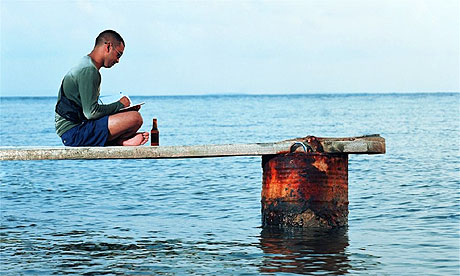
Wednesday, March 13, 2013

An enduring legacy: Visiting the Badaling Great Wall


Every time someone I know visits China, they’d be all like “Louis Habash, you should go see the Great Wall if you happen to visit China!” So, just a few days ago, I had the chance to visit the Badaling part of the Great Wall.


Image Source: china-tour.cn


Let me give you guys a brief history of the Great Wall. Around 5th century BC, the Chinese were already familiar with the idea of having a good wall to defend themselves against raiding enemies, but it wasn’t until the First Emperor of China, Qin Shi Huang, that the Great Wall, as we call it today, was built. According to some experts in Chinese history, building the Great Wall cost hundreds of thousands of human lives. Also, most of the wall that’s still standing today isn’t part of the original wall because most of it has eroded over the centuries. What you can see today was built during the Ming Dynasty—and this includes the Badaling section.


Image Source: en.wikipedia.org


When you arrive at the Great Wall, be prepared to walk through throngs of people, especially if you visit during spring. Get ready for a long and arduous climb if you don’t like riding the cable car up the wall. If you are interested in more of the Great Wall’s history, the Great Wall Museum is also a good place to explore.

You can reach the Badaling Great Wall by riding public buses located at various areas around Beijing. The bus ride to the Badaling Great Wall takes about an hour. The wall is open from 6 am to 6:30pm.


Image Source: great-wall-of-china.org


Join me in my travel adventures by following me on Twitter.

Tuesday, February 12, 2013

Kathmandu: The ancient city of wonder

Image Source: AllNepal.com
If you love ancient cities, then you’ll love Kathmandu, the capital of the kingdom on the roof of the world—Nepal. The city is more than 2000 years old and is located 4,600 feet above sea level. Enclosed within a valley, Kathmandu is a sight to behold.

Image Source: LonelyPlanet.com
Kathmandu is the best place to experience Nepali culture and tradition. I found many Hindu and Buddhist temples just by walking around, which is, by far, the best way to experience Kathmandu. The famous Pashupatinath Temple can be found in Kathmandu, near the banks of the Bagmati River. You can also visit the Durbar Square, which is one of the oldest squares in the world; walk around Thamel, the city’s bustling tourist city; climb the 365 steps to the Swayambhunath, the so-called monkey temple; and visit the King’s palace, which is now a museum.

Image Source: TripAdvisor.com
However, despite the abundance of things to do and places to visit, the best thing to experience in Nepal is the food. Food here is cheap and plentiful, and most of those I tasted were heavenly, to say the least. My favorite was the Dal Bhat, which is a meal that consists of a lentil soup, mixed vegetables, chili, pickled vegetables, more vegetables, and mutton. Notice the amount of vegetables? It’s no wonder why Nepalese people are so slim. Food in Nepal has a little bit of Indian influence, which means that people with really sensitive stomachs should be wary.

I love Kathmandu. I think it is a great city with so much to offer, and I will definitely come back—if I get back from Mt. Everest alive, that is.

Live vicariously through the adventures of Louis Habash by following this Twitter page.

Sadhus: The wandering holy men of Nepal

Image Source: EverestUncensored.com

In my travels, I have often searched for something different—something extraordinarily inspiring. This time, that search led me to the kingdom on the roof of the world, Nepal—one of the two last homes of the Sadhus.

The Sadhus, or “good man” in English, are wandering holy men indigenous to Nepal and India, where Hinduism is widely practiced. They are highly revered because many see them as the embodiment of all that is good in man. Most of them are also practitioners of Yoga--thereby called Yogi-- and meditation. Almost all of them are ascetic, living simple lives, and have left behind all material attachments to live beyond the fringe of normal society.

Image Source: EduPics.com

It is said that talking to a Sadhu is deeply inspiring and moving; however, I did not find it so, probably because I don’t speak a word of Hindi. Some Sadhus do speak English, but sadly, I wasn’t able to meet one who does. My tour guide however, was helpful enough and answered a few questions for me. He said that in order to become a Sadhu, a man must leave everything behind and look for a “guru” who can then teach him the ways of the Sadhu. Throughout India and Nepal, there are different Sadhu sects, and each has its own set of rituals and traditions. Women can also become Sadhus and are called Sadhvi.

Image Source: IndiaTimes.com

While walking around Nepal, I noticed that these holy men have nothing and want nothing, satisfied with just simple donations of food and clothing. I chuckled inwardly, remembering the day when my mother said to me, “Louis Habash, material things won’t do you any good when you die.” I realized then that she was right.

For more of my travel adventures, follow me on Twitter.

Wednesday, January 9, 2013

Fringe benefits and all: Earning as a travel writer

Image Source: WanderLust.co.uk
There is an illusion to travel writing that outsiders may have—that it’s just a lap of luxury. If you have the guts to become a travel writer, as was required of Louis Habash when I signed up for the job, then you should be able to endure stomach-wrenching local delicacies or bear sleepless backpacking trips just to get a good grasp of a first-hand story. But, it’s not like that all the time. Once you begin publishing your pieces, going on press trips, and establishing your names, freebies pour in as all-expenses paid travel, meals, and events admissions. Now that’s a way to fund your career, a.k.a your lifestyle as a travel writer. And then publishers and television networks start paying you for the stories and photos.

My task is mostly to churn out guest posts in other travel blogs. I write 500-worders per day and syndicate them, earning for just several hours of work. My work dynamics may differ from others, but I appreciate just how creativity cannot be dampened by being on the road, and learn from how others do it.

Image Source: SmilingGlobe.com

Selling stories to travel magazines

John Beede sees this “most traditional way” as the least paying means to travel write. It’s also quite a tough ride to scour the market for interested magazines and publications and face the non-guarantee of payment.

Image Source: Internet-Job.org

Floating online travel agency
 

Mika Hamilton suggests that you establish contacts with tourism departments and travel agencies. As you write travel stories, you can also book visitors for them online. That’s earning for you extra income right there.

Although it’s a hard career choice to take, sometimes mundane even, travel writing can be a lesson in chaos with the most satisfying returns to offer the adventurous.

Follow this Twitter account to get more tips on how to become a travel writer.

REPOST: More for Your Money: Be on the alert for travel scams

Be an alert traveller by knowing the scams and frauds that may come along your way as you step into a foreign land. Get tips from this LA Times article.

Image Source: Coloribus.com
If you have the money to travel, you'll want to spend it the way you want to spend it. That means making sure rip-off artists keep their mitts off your dough.

With this in mind, the members and editors of travel website VirtualTourist have compiled a list of the worst travel scams and schemes and how to avoid them.

Pickpockets: Pickpockets no longer limit themselves to the simple "bump and grab." VirtualTourist members mentioned that in many instances, pickpockets are working in teams: While one shows you a gold ring or points out mustard on your shirt, another cohort is stealing your wallet. Nowadays, there are many more things for thieves to steal than just your wallet — cameras and smartphones, for instance.

Distraction can also be a scammer tool. A woman will approach you waving a newspaper or asking for help reading something, but under the newspaper, she is palming your phone off the cafe table. If someone offers you unsolicited help, politely decline and quickly walk away.

Always keep your valuables (passport, important papers and extra credit cards) in your hotel safe, and make sure to record the serial numbers of any electronics. Some cities require a serial number to file a police report.

Image Source: PeabodyStreet.com
Pickpocketing is rampant in crowded areas with a large number of tourists. VirtualTourist members commented that it was common in Barcelona, Spain, particularly on Las Ramblas, the central pedestrian street.

Gypsy cabs: Taxi scams can be as simple as drivers who are unlicensed and who overcharge or who take you the long way to your destination. Here are some tips to make traveling by taxi easier. If there's a taxi queue, get in the line. Many cities (Rome, New York) have a set fare from the primary airport to inside the city. Make sure you know this number and clarify it before you put your bags in the car. If you are leaving your hotel and going to a site, ask the doorman or concierge how much the taxi fare should be. VirtualTourist members note that Rome is a particularly bad spot for taxi scams, especially near Termini Station.

Volunteers with poor intentions: In a foreign country, "volunteers" may offer to assist you when you're making a transaction or using any automated machine. Be wary of any stranger who offers help too easily, particularly in high tourism areas or transportation hubs, such as Paris' subway and train stations, especially Gare du Nord. If possible, buy tickets in advance or through a window vendor at the station.

Image Source: Blogspot.com

A substitute for a tourist attraction: In certain parts of Southeast Asia, VirtualTourist members noted, locals may approach tourists, noting that the "palace is closed today because of" (fill in the blank with a religious ceremony, royal function, cleaning, etc). Then they'll steer you into a nearby tuk-tuk (or motorized rickshaw), offering to take you to a gem factory or another tourist attraction. Sometimes these not-so-do-gooders might even have on a uniform. The palace/site/wat is probably not closed today, so before you turn around and embark on a tuk-tuk ride to commissioned jewelry stores and tailors, check for yourself. There are numerous member reports of this at various places in Bangkok, Thailand, including the Grand Palace and Wat Po.

The math genius: The math genius is often a waiter or taxi driver, which helps (him, not you) since he's already provided you with a service for which you need to pay. Here's how it works in a taxi: You owe the driver 15 euros, and you pay with a 20 euro bill (about $25). He switches out the bill you gave him for a 5 euro bill, which looks similar. He holds it up and argues that you owe him 10 more euros. You apologize and give him the 10 euros, and only after exiting the car do you realize you essentially paid twice the taxi fare. Many travelers have fallen for this trick because of exhaustion or unfamiliarity with the local currency. Although this can happen everywhere, VirtualTourist members say it is common in Istanbul, Turkey, and New York City.

Want more travel and safety tips? Visit this Louis Habash Facebook page.

Thursday, December 13, 2012

New travel app Spun is not just for tourists

Have you been “Spun-ed?” Read about this travel app for newbie travelers and well-seasoned jetsetters from this NBCNews.com article.


Spun is the latest iPhone app aimed at travelers, bringing hundreds of news sources together in a 3D interactive display. It shows you what's hot in 11 big cities across the country, maps destinations and sends reminders to your phone when you are in the vicinity of a place you've marked as a must-see spot.


Spun's navigation is built around a spinning prism. One facet holds "top stories," while the other three contain stories by topic, including Arts & Entertainment, Food & Drink and Lifestyle, a catch-all for other interesting things to see around town. In San Francisco, you can find the best free Wi-Fi hotspots in Hayes Valley, or catch a polar bear frolicking in man-made snow at the San Francisco Zoo. News is updated regularly, so you'll never run out of things to do.


Tapping a story’s image opens the full text, along with a map and multimedia content. Like what you see? Tap the faceted heart and the location will be saved to your favorites. If you get close to the location, the app will send an alert, which can be especially helpful for more-spontaneous travelers. You also can share your finds to Facebook, Twitter or by email.

While Spun has been touted as an app for visitors, locals might find useful to point out things to do that they otherwise would have missed.

Spun currently includes news about New York; Boston; Philadelphia; Washington; Miami; Chicago; San Francisco; Los Angeles; Portland, Ore.; Austin, Texas; and Seattle. It can be downloaded for free from the App Store.

Source:http://www.nbcnews.com/travel/travelkit/new-travel-app-spun-not-just-tourists-1C7319909

Friday, December 7, 2012

France's SNCF to deploy 'polite police' on trains to tackle bad manners

Read about the deployment of polite police in France, one of the the country’s government’s efforts to stamp out ill-mannered passengers in public transportations, from this article released by Telegraph.co.uk.

 
France's state-owned railway operator is to deploy an army of almost 3,000 inspectors with tough new powers to eradicate bad manners on the nation's trains.

SNCF employees are being tasked to tackle the exploding number of complaints about rude or unruly passengers that have rocketed by 25 per cent this year. Traveller gripes include spitting on and insulting ticket inspectors, putting feet on seats, pulling emergency alarms without reason, speaking loudly on mobile phones and playing music and damaging train interiors. SNCF boss Guillaume Pepy said a "line has been crossed" in "uncouth behaviour and delinquency" blighting the lives of many of the four million people who use his company's trains every day.

"Impolite behaviour generates a feeling of anxiety and discomfort," said Mr Pepy, adding that it posed a "real obstacle" to weaning the French off their cars in favour of public transport.

To stamp it out, some 2,700 inspectors will impose a new array of tougher fines. Passengers caught with feet on seats will pay 45 euros (£36); those who smoke will be fined 68 euros and anyone pulling the emergency break without reason can expect to pay between 165 and 700 euros.

Similar punishments have been introduced in Britain, where London's rail and Tube passengers who put feet on seats or play music too loudly face £50 on-the-spot fines. Under draft plans, more serious offenders may also be sent on "citizenship courses" to be taught good manners, while 500 new "politeness mediators" will be trained to deal with unruly youths. Another 460 staff will raise awareness among 220,000 schoolchildren next year.

A special national hotline will be launched for victims of bad behaviour. With a growing number of commuters turning up to work in tears or taking sick leave after a harrowing train experience, a special club of "businesses against impoliteness" has been launched.

"Our aim is to record bad behaviour we're all victims of and to understand the general malaise of our staff and our customers," said President Stéphane Volant. The scheme comes days after a French mayor introduced new rules to oblige visitors to respect "social norm" by saying "please", "thank you" and "goodbye" to town hall staff or face being thrown out. 


Gerard Plee, mayor of the village of Lheraule, northern France, population 163, said no French law obliged people to be polite so he took the matter into hand. Visitors are greeted by a sign to the "eternally discontented, grudge-bearers, the persecuted and other moaners" informing them that anyone who "manifestly and voluntarily" fails to respect the rules of common courtesy will be "asked to leave the premises".

Source: http://www.telegraph.co.uk/news/worldnews/europe/france/9721264/Frances-SNCF-to-deploy-polite-police-on-trains-to-tackle-bad-manners.html